The Decay and Hypocritical Revival of Morality in Art
I grew up in a time older people liked to call the decay of the mainstream, or more precisely, the decay of hip-hop and rap music.
The early 2010s were wild. Drill music started rising. SoundCloud rap started emerging. Everything felt raw, experimental, unmixed, reckless, but real. It felt like music made in bedrooms, basements, and trap houses. It did not feel clean. It did not feel safe. It felt alive.
A whole generation built its identities around that sound.
The party started with murder music, scream rap, cloud rap, emo rap, and drug music. We did not just listen to it. We made it the soundtrack to our lives.
And some kids did not just relate to the music. They followed it.
High drug usage. Violence. Death. Self-destruction. Fashion built around decay. Personalities built around pain. A generation learned how to turn trauma into an aesthetic.
Art was no longer something we observed from a distance. Art became something we lived inside of.
But during that time, there was not a serious mainstream conversation about morality in the art. I admit we were kids at the time, and it was impossible for the adults to shield us from the internet
Now we are older.
And suddenly morality has returned to the conversation.
But not because music glorified murder. Not because kids were swallowing pills trying to become their favorite artists. Not because identity became tied to self-destruction.
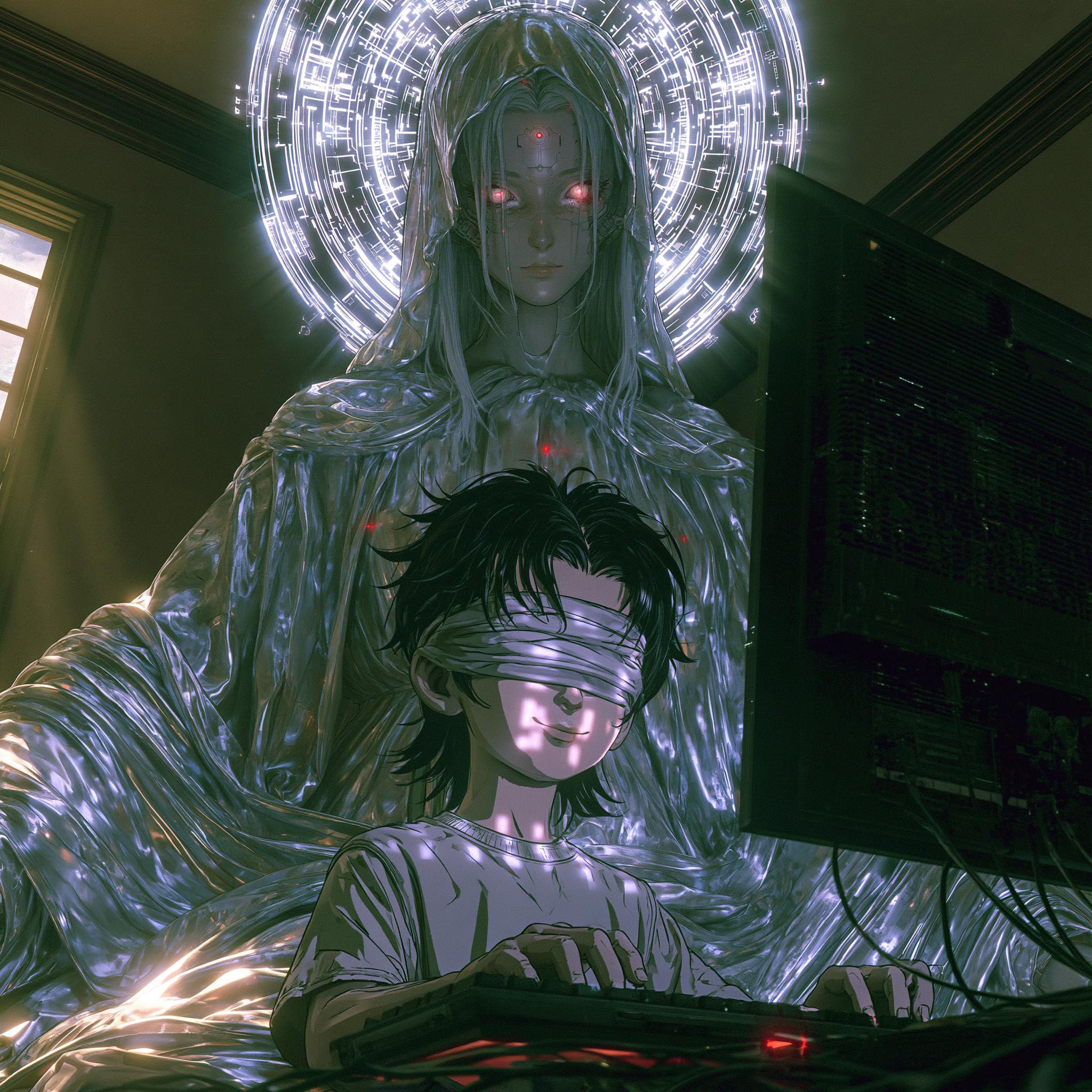
Morality returned because AI entered the room.
Now people want to talk about ethics. Now people want to talk about what is real. Now people want to talk about the soul of art.
A generation raised during one of the wildest eras in music history, a generation influenced by rebellion, violence, drugs, internet chaos, and raw emotional exposure, is now offended that a machine may be replacing the artist.
Now the art is called slop.
Now it is called fake.
Now it is called degenerate.
But have we forgotten that we helped create this wave?
We came from a time where being different mattered more than being polished. A time where breaking the rules was the entire point.
Now AI has arrived and pushed that same logic further.
It gives people the power to unleash entire inner worlds without waiting for permission, a budget, a studio, a camera crew, or a label. It lets people build fantasy at the speed of thought.
And now we are becoming the older people.
The same way they looked at our music and called it the decay of culture, we look at AI and call it the death of art.
The fear is not that AI has no soul.
The fear is that we do not really care about the soul of art. We just fear being replaced.
Because when art influenced kids to destroy themselves, we called it expression.
When art turned trauma into fashion, we called it authenticity.
When music became a costume for violence, addiction, and nihilism, we called it culture.
But when a machine started creating, suddenly art needed a moral code.
That is the hypocrisy.
I understand the anger. We grew up on art. Art became our identity. It became our language, our rebellion, our proof that we were different. So when a machine enters that sacred space, it feels like theft. It feels like something human is being swallowed.
But maybe the party is just over for us.
And maybe for the next generation, the party is just beginning.
They are not looking at AI as the death of art. They are looking at it the same way we looked at SoundCloud, drill, and the internet: as a door. A way out. A way to create without permission. A way to build a world when the real one gives you nothing.
The pattern is still moving forward, but it does not feel like progress. It feels like acceleration.
More niches. More noise. More fantasy. More identity. More tools. More confusion. More freedom. More decay.
Things are getting worse.
Every generation says that when the future stops asking for their permission.